I stopped trying to fit in.
For years, I thought the answer was to become better at being who the room expected. What I finally understood was that I was building the wrong room.
I knew how to be useful. I didn’t always know how to be visible.
I learned early how to read a room, adjust myself, and keep the parts of me that felt like too much tucked neatly out of sight. I could be capable. I could be helpful. I could work hard. But taking up space as myself was another matter.
Real estate gave me a career, but its culture often made that old habit worse. I was told what a successful agent was supposed to sound like, sell like, post like, and chase. I tried. I walked away more than once. For a long time, I treated that as a failure of discipline.
It wasn’t. I wasn’t unwilling to work. I was unwilling to build a business that required me to perform a version of myself I didn’t believe in.
I had to stop measuring my life against someone else’s model of success.
I am an artist as much as I am an entrepreneur. I write. I photograph. I build things. I see possibilities and want the freedom to follow them. I have never been particularly good at having someone else hand me a formula and tell me, “This is how you’re supposed to do it.”
For a long time, I thought there was something wrong with that.
I looked at people with corporate careers, recognizable company names behind them, neat résumés and predictable paths, and sometimes wondered whether what I had built counted in the same way. Most of my working life has been spent creating my own opportunities instead of waiting for someone else to give me permission.
Eventually, entrepreneurship taught me to see that differently.
I spent time around Sacramento’s startup community and watched people build companies, invent jobs that hadn’t existed before, and create value where there had previously been only an idea. It changed the way I thought about my own work.
I Love Fair Oaks began that way.
There wasn’t a company waiting for me to run it. There wasn’t a job description or a blueprint. I built it from my writing, photography, relationships, curiosity, and my own idea of what a community publication could be. Over time, it became a recognizable local brand.
I built something that hadn’t existed before.
Real estate has been similar.
I was never going to build my business by knocking on hundreds of doors, chasing internet leads, calling strangers all day, or trying to become the loudest REALTOR® in the room. Other people can be very successful that way. It simply wasn’t going to be my way.
That didn’t make me less skilled at real estate.
I grew up around the business. My stepmother was a broker and taught me a great deal. I worked in lending and title and learned what happens on the other sides of a transaction. I have spent decades seeing how deals come together, where they can fall apart, and what can often be prevented before a small problem becomes a large one.
My value isn’t in how loudly I announce that I sell houses.
It is in what I notice, what I anticipate, what I know to ask. What I have learned from underwriting loan packages, negotiating contracts, and helping people through decisions that affect their money, their home, and their life.
The market matters. Interest rates matter. Numbers matter. But they aren’t the reason most people move. Life is.
Someone dies. Someone retires. A family grows. A marriage ends. A parent needs help. A house becomes too much. Someone finally buys their first home. Someone wakes up one morning and realizes they don’t want to live the way they’ve been living anymore.
A home is where all of that becomes tangible.
Once I understood that, I stopped trying to become the kind of real estate agent I thought I was supposed to be.
I started building the kind of practice I actually believed in.
I had already begun making room.
For nearly two years, Brad and I had been simplifying our own life. We cleared out a 10-by-15 storage unit we had been paying for, eventually reduced it to a 5-by-10, and moved into our condo with much less than we had before.
I wasn’t just getting rid of things. I was thinking about the next phase of my life.
What did I want it to look like? What did I really want to carry forward? What could I let go? And practically, what would happen if someday I found myself living without Brad?
Those questions became the foundation of my book, Downsizing with Intention.
I wrote it, published it, and began working on a companion workbook to help people work through those same decisions in their own lives.
I was working on that workbook the day Brad died.
Life made the question impossible to avoid.
Brad died suddenly at home in July 2026.
I had thought about the possibility of losing him someday. I had tried to prepare practically. I had built my business, simplified our life, and asked some of the hard questions.
I just never imagined someday would come so soon.
There is no graceful way to describe the moment a shared life becomes yours alone. One day there is a we. The next day, you are standing inside the same rooms, surrounded by the same things, trying to understand who me is now.
I wasn’t only grieving Brad. I was learning how to become “me” after “we.”
BRAD
He loved me without asking me to become smaller.
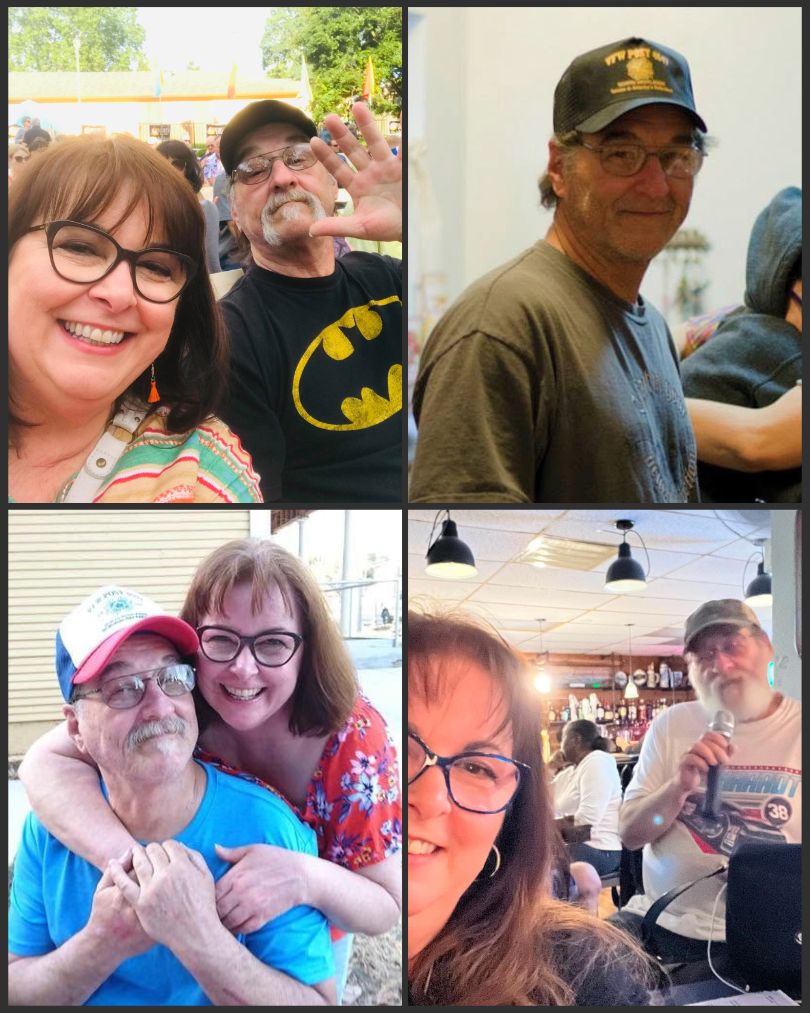
Brad was my best friend, my teammate, and my biggest supporter: kind, funny, imperfect, generous, and steady.
He was the person who showed up.
If you’ve ever seen one of my open house signs around town, there’s a good chance Brad was the one who put it there. He’d map out the route, load the car, set out every sign, and then go back later and pick up every single one. He never complained. He was simply happy to help, because that’s who he was.
He was a Vietnam veteran who served two tours in the U.S. Navy. He was proud of his service. He worked hard his whole life and would give the shirt off his back to help someone else. He genuinely loved people.
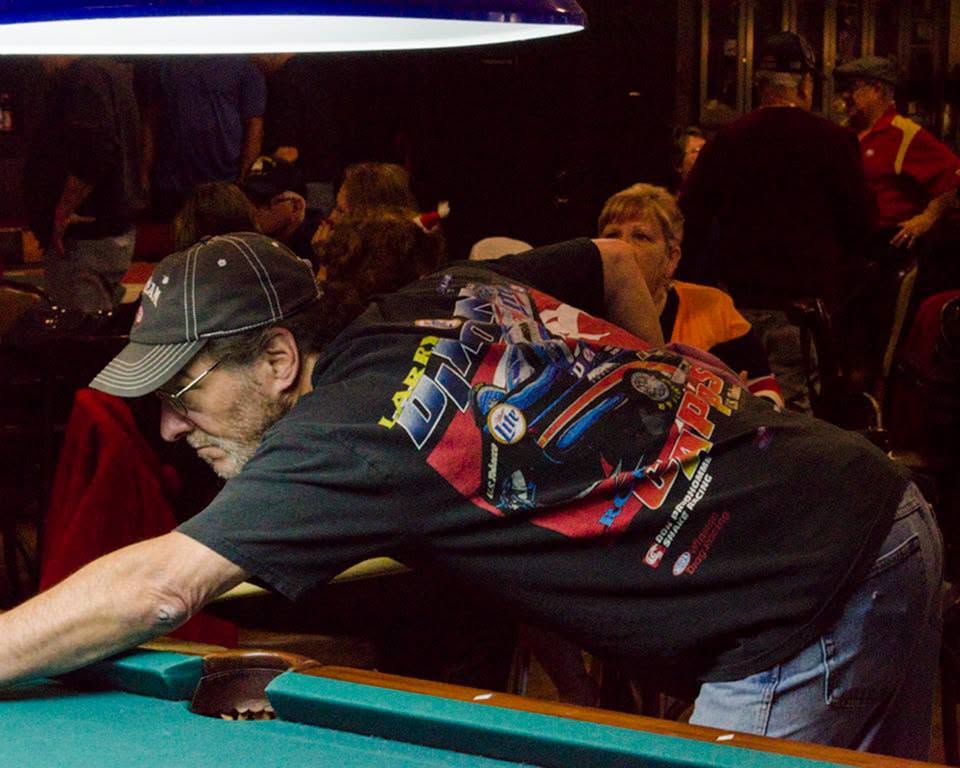
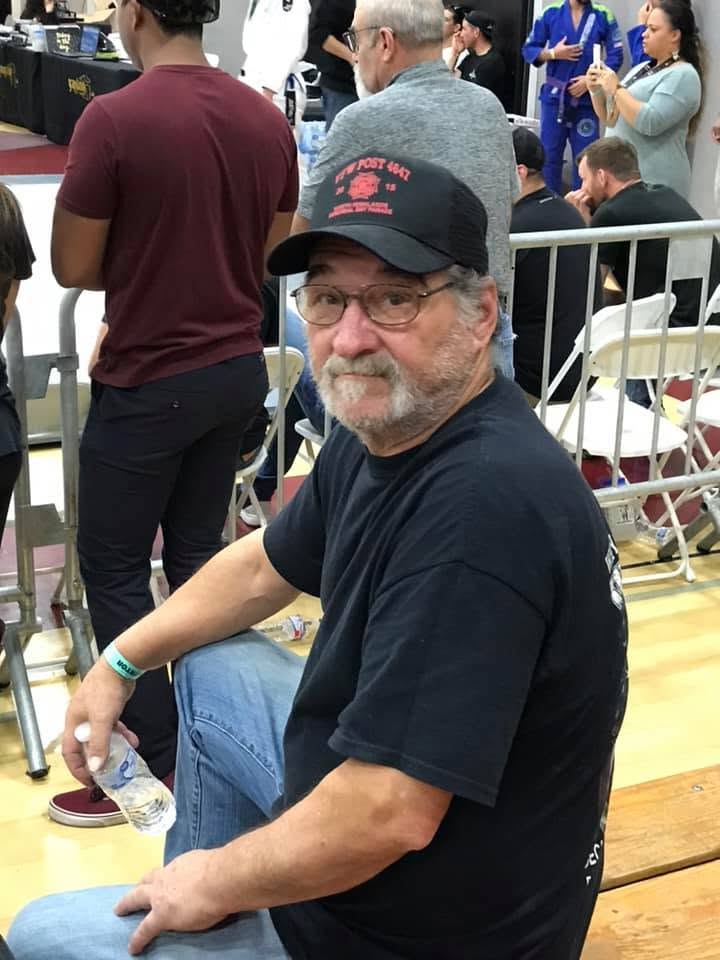
And he loved NASCAR. I mean, loved it.
Every race mattered. Every driver had a story, and he’d tell me all about it with the excitement of someone talking about family. Sometimes he’d corner someone into a twenty-minute conversation about racing, and I’d quietly try to rescue them, but I loved watching his face light up because it made him so happy.
He had one of the kindest hearts I’ve ever known. He saw the good in people, even when they didn’t always deserve it.
I never had to wonder whether Brad loved me. His love never felt conditional, and that gave me more freedom to be myself than I understood at the time.
One of the greatest luxuries of my life was that I got to take Brad for granted.
Not because I didn’t appreciate him. I did. But his love was so steady that I never had to wonder whether it would still be there tomorrow. He stood beside me while I experimented, created, changed direction, built businesses, abandoned ideas, tried again, and figured out who I was.
I never understood what a luxury that kind of certainty was until it was gone.
I used to joke that Brad loved me more than I loved him. Now that he’s gone, I understand how much of my heart he carried with him.
I had built a safety net before I knew I would need it.
For years, I sometimes wondered whether the life I had built counted because it didn’t look like someone else’s version of success.
Then Brad died, and I discovered just how much I had actually built.
I had work that belonged to me. I had created businesses and skills I could carry forward. Brad and I had already reduced our expenses and downsized much of what we owned. I had thought about how I would support myself if I were someday on my own. I had created a home I could stay in and a life I did not have to immediately dismantle just because my husband was gone.
In a very real way, I had saved myself.
I had not predicted what was going to happen. I certainly had not prepared emotionally for losing Brad so suddenly.
But I had built enough underneath myself that when my life broke open, there was something there to catch me.
And I had people.
My sisters. My family. My friends. People who knew me. People I had known for years. A community I had spent a long time becoming part of.
They showed up.
They created a GoFundMe when I suddenly needed help. They brought me food. They called. They checked on me. They sat with me. They gave me practical help when my brain could barely make simple decisions.
They reminded me, over and over, that although Brad was gone, I was not alone.
I saved myself by building a life I could stand on. And I was held by people who loved me while I learned how to stand in it alone.
Community is part of the life you build.
Losing Brad made me understand something about home that has very little to do with square footage, interest rates, or resale value.
Where you live matters because of who is there when life happens.
A neighborhood can become people who know your name. A local business can become a familiar face. A casual acquaintance can become a friend. Family being close by can suddenly matter enormously.
That is one of the reasons I love Fair Oaks so much, and one of the reasons I created I Love Fair Oaks.
I have always been a connector. I like introducing people to one another, telling people about a local business they should know, helping someone who just moved here figure out where to go, and sometimes even helping them find their people.
I have watched people arrive from the Bay Area or somewhere else and discover that what they were really looking for wasn’t simply a different house.
They were looking for a place where they could belong.
Now I understand the value of that more than I ever did before.
I stayed. Then I began changing what staying meant.
Because of some of the decisions we had already made, I did not have to immediately uproot the rest of my life too.
I could stay in our condo.
But staying didn’t mean everything had to stay the same.
Brad had died there. I did not want our home to become a place where I continually relived the worst day of my life. I needed it to feel warm again. Safe again. Alive again.
Eventually, I needed it to feel like mine without pretending it had never been ours.
So I began reclaiming it one decision at a time.
I cleared what no longer belonged in the life I was living. I turned his room into a guest room instead of a place to store the past. I started changing my surroundings, making room for my sisters, my family and friends, laughter, work, and the life that was still happening around me.
Honoring Brad does not require me to turn our home into a storage place for the past.
I can keep the stories without keeping every object. I can love him and still change the room where he died. I can make the home warm again.
That isn’t leaving Brad behind.
It’s continuing to live.
And it has deepened what I understand about downsizing and making room.
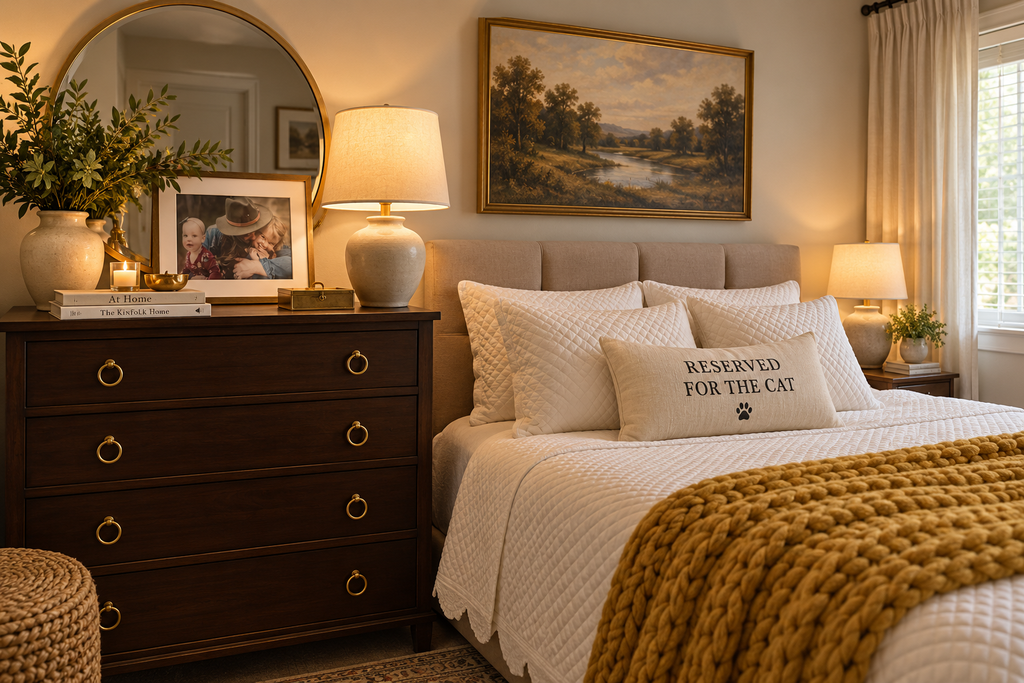
Making room isn’t getting rid of things or putting a house on the market. It is deciding what you want your space, your time, and your life to make possible.
You can honor what came before without living inside it forever.
You can keep the love without keeping every possession.
You can begin a new chapter without pretending you chose the ending of the last one.
I built the framework before I knew how much I would need it.
After Brad died, I wanted to finish the workbook.
I couldn’t.
I didn’t have the capacity. Grief took up the space where that energy had been, and the workbook had to wait.
But slowly, I began recognizing something.
I was living the very framework I had been creating.
I had to name what had changed.
I had to picture a life I hadn’t expected to be living.
I had to honor everything Brad and I had built without making the past the only place I could live.
I had to shape a practical path through my home, my work, my finances, and my future.
And eventually, I had to begin stepping into a life that was mine.
I thought I had created a framework for downsizing and life transitions.
I didn’t realize I had also created something that would help hold me together when my own life changed overnight.
The framework did not make grief easy.
It gave me somewhere to put my feet.
That changed the meaning of this work for me.
I am still in the middle of my own next chapter. I am still finishing the workbook. I am still building a home, a business, and a life around the woman I am now.
I am not standing at some imaginary finish line calling back instructions.
I’m walking it too.
And that is why I do this now.
I do this work for people whose lives no longer fit quite the way they once did. Sometimes the change is heartbreaking. Sometimes it is exciting. Sometimes nothing dramatic happened at all. You just know you want something different.
I’m not here to tell you what your next chapter should be.
I’ll help you name what’s changing, picture the life you actually want, honor what came before, shape the practical path forward, and step into it on your own terms.
And I’ll be in your corner while you do it.
I’ll listen. I’ll brainstorm with you. I’ll help you work through the parts that feel overwhelming, and I’ll be your biggest cheerleader as you begin building a life that feels like yours.
Making Room for What Comes Next
Start where you are.